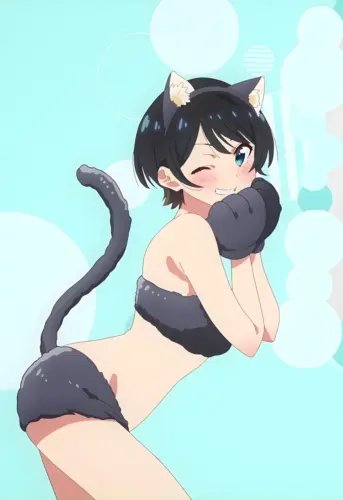
Fanservice in Senran Kagura.Ruka Sarashina from Rent A Girlfriend.
Fanservice is a term that goes beyond this, though, like when an anime series has many seasons (Pokémon, for example), then in later seasons they introduce nostalgic characters from older series (Misty, in this case) or other nostalgic, legendary elements that made the beginning series so great in the first place.
In the 2020s and beyond, the “fanservice” definition has been warped to only mean ecchi, hentai, or awkward camera angles, but that’s not the full, original picture.
Synonyms:
Pleasure face, ecstasy face, orgasm, women.
Antonymys:
Neutral expression, stoic face.
History:
Fanservice goes as far back as the 1990s, though it technically started in the 1980s with anime like Urusei Yatsura and others.
In the 1990s, during anime’s global explosion, Shōnen series often included dynamic fight scenes and strong male characters, while shōjo series presented romantic elements appealing to young female viewers.
This is what fanservice meant in the beginning.
This shifted in the 2000s with anime like Love Hina, and later anime like To Love Ru , which reshaped the definition of fanservice with lots of risque, sometimes naked, half-naked, or “accidental” shots of attractive girls caught in the nude or simply being comfortable doing so.
Though in reality, this has applied to male characters as well historically, but with less judgment or outrage.
Example Sentences:
"Fanservice is so cringe."
"Nothing like some good old fashion fanservice".